
Interior design is not just about choosing colours or picking furniture. It is a structured process built on listening, planning problem-solving, and coordinating across dozens of moving parts.
This article walks through the interior designer Journey process end to end from the first conversation with a client to the final handover. Whether you are planning a renovation, studying design, or simply curious, here is an honest look at how designers work.
Understanding Client Vision and Requirements
The first stage has nothing to do with design. It is about understanding people what they need, how they live, and what they are trying to achieve. At House Of Perrarus, our human-first approach is considered the foundation of every successful project. An Interior designer who skips this stage will almost always miss the mark, no matter how talented they are. They often have a feeling “something modern but warm” or “functional but not boring.” The designer’s job at this stage is to translate that feeling into something concrete.
This means asking the right questions. How does the family use the space on a typical day? Do they host often? Are there children or pets? What bothers them most about the current setup?
Building the Foundation with Skills and Knowledge
The best Interior designers do not just demand creativity. It requires high technical expertise and the knowledge of the industry. Therefore, designers learn about space planning, lighting, and choice of materials.
They are also taught design software that is used to visualize ideas. Such tools as 3D modelling assist clients in getting the concepts in a clear manner. Consequently, communication is enhanced and the expectations are balanced.
More than that, designers keep in line with the changing trends. They discuss innovative materials and intelligent home technologies. In this way, their work will be relevant and innovative.
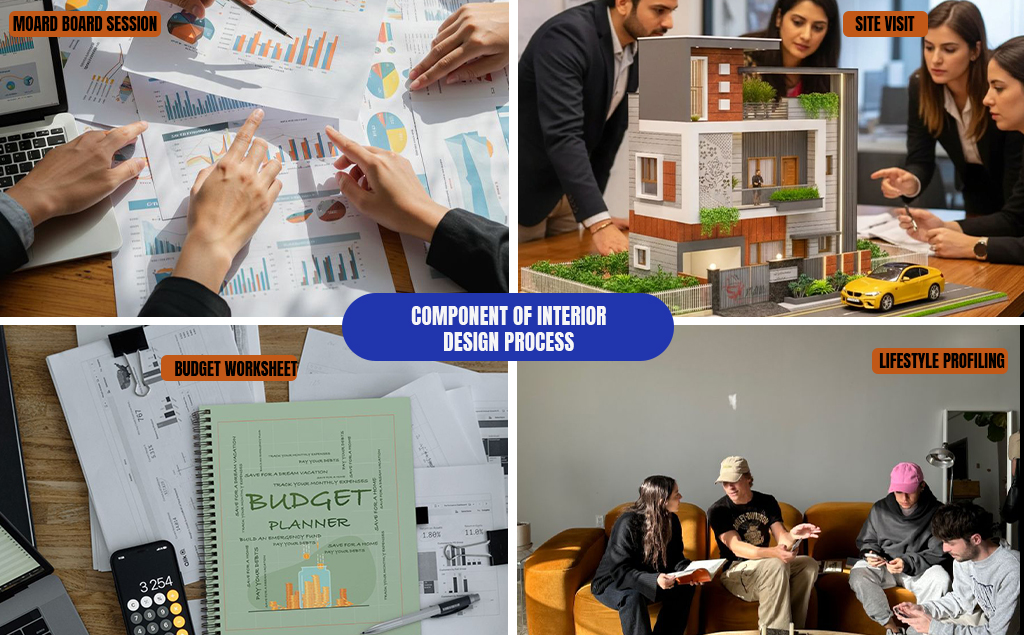
4 components of Interior Designer process
Most designers combine structured questionnaires with open conversations. The questionnaire captures hard data like room sizes, budget, timeline, number of rooms. The conversation captures the rest.
1. Mood board sessions:
Customers post pictures they like on social media sites like Instagram and Pinterest. Patterns and taste that words alone could overlook are instantly shown by this.
2. Site visits:
Seeing the space in person reveals things a floor plan never shows natural light direction, awkward corners, existing structural elements.
3. Budget worksheets:
A sample sheet that forces early clarity on what is realistic. Avoids painful surprises later.
4. Lifestyle profiling:
A set of questions about daily routines, storage needs, and future plans (like growing families or ageing in place).
4 Approaches to Transform Concepts into Final Designs
The process of transforming ideas into a reality is organised. To begin with, designers meet the clients to get their needs met. They talk of lifestyle, preferences, and budget constraints. Then they make mood boards and preliminary sketches. These images aid in the project orientation. In the meantime, layouts are optimized to achieve space profitability by designers.
In addition, they check progress on a regular basis. This ensures quality and punctuality. Consequently, the project remains within schedule without affecting design integrity.
1. The Role of Creativity in Interior Designer
The success of any interior designer is based on creativity. It changes the ordinary place to the phenomenal. Colour psychology is what the designers can use to manipulate mood.An example is that warm colours make one feel secure and close. In the meantime, muted colours are elegant and peaceful. Such decisions influence the emotions of individuals within an environment.
Besides, designers play with textures and patterns. They blend colours to produce visual depth. Consequently, interiors become dynamic and interesting. Lighting is also an important factor. Layered lights are applied by designers as a way of enhancing ambiance. This method brings out points of focus and enhances functionality.
2. Client Collaboration and Personalization
Cooperation with clients is vital in interior design. Designers have to know the personal preferences. As such, they pose thorough questions when consulting. They also make each of the design features personal. Furniture, to the decor, it all indicates the personality of the client. This strategy builds significant spaces.
Further, designers offer a variety of ideas. Clients are included in the decision making. Consequently, the levels of satisfaction go up. Transparency also builds trust. Designers exchange schedule, budget, and status reports. This develops long term relationships with the clients.
3. Future Trends in Interior Design
The field of interior design is changing fast. The concepts of sustainability currently dominate the design decisions. Designers are willing to use environmentally friendly materials and energy saving solutions.
Moreover, intelligent technology has become a part of modern interior design. This is enhanced by automated lighting and climatic control. These characteristics rebrand modern life. Minimalism is also popularized. Straight lines and uncluttered areas bring about a feeling of peace. Nevertheless, designers have customized features that they include to make it warm.
Moreover, the biophilic design bridges the interiors and nature. Plants, organic materials and natural light improve well-being. This is a trend that is ever-increasing all over the world
4. Final Transformation: Bringing Spaces to Life
The last phase is when the vision is transformed into reality. Furniture, decor, and lighting are installed by designers with a lot of attention. At the same time, they make sure that they align with the original idea. Adjustments occur if needed. This has ensured a smooth and well-polished product. The moment of revelation is extremely important. Clients are exposed to their dream space for the first time. This scene justifies the work of the designer.
In addition, the successful projects create an improved portfolio of the designer. They demonstrate.
Why Presenting the Right Concept Matters
A concept is not just a pretty collage. It is a design argument, a clear answer to the question, “why does this space feel and work the way it does?”
When a designer presents a concept well, clients do not just see what the room will look like. They understand why the choices were made. That understanding builds trust and reduces the number of revisions later.
A concept presentation typically includes a mood board, a colour palette, a materials direction, and a rough floor plan all shown together so the client sees how the pieces connect.
Conclusion
The path of an interior designer is a mix of creativity, planning and performance. It converts the ideas into meaningful environments. Every project is a story by itself. Besides, designers keep changing accordingly with the trends and challenges. They perfect their abilities and broaden their perception. Consequently, their work also changes over time.
Finally, interior design is not just a matter of looks. It influences the lifestyle, emotions and communication of people. Thus, any design process turns into an effective change.
Start Your Design Journey
Design Your Perfect Home Today